A Knight of the Seven Kingdoms book vs show is one of the most interesting comparisons for Game of Thrones fans in 2026. George R. R. Martin’s Dunk and Egg stories are much smaller than the main A Song of Ice and Fire novels, yet they have a special charm that works very well on television.
The HBO series takes its first season from “The Hedge Knight,” the first of three published Dunk and Egg novellas. Martin has said that the first season adapts that story and that the show aims to stay very close to the source.
However, a book and a television show cannot tell a story in exactly the same way. A book can spend pages inside a character’s thoughts. A show must show those thoughts through acting, dialogue, setting, music, and action.
Therefore, A Knight of the Seven Kingdoms book vs show is not simply a question of which one is better. It is really a question of what each version does best.
This guide looks at the story, Dunk, Egg, the tournament, the Targaryens, the humor, the violence, the themes, the ending, the important changes, and the strengths and weaknesses of both versions.
Spoiler warning: This article discusses major events from The Hedge Knight and Season 1 of the HBO series.
Contents
A Knight of the Seven Kingdoms Book vs Show at a Glance
Before going deeper, here is the simple answer.
Category
Book
TV Show
Main source
“The Hedge Knight” novella
Season 1 adaptation
Main hero
Ser Duncan the Tall
Peter Claffey as Dunk
Main companion
Egg
Dexter Sol Ansell as Egg
Story size
Short and focused
Six television episodes
Tone
Warm, funny, tense
Warm, funny, visual, and dramatic
World building
More detailed in prose
More visual and selective
Dunk’s thoughts
Easy to understand
Shown through performance
Egg’s mystery
Strong through narration
Built through behavior
Tournament
Richly described
Expanded visually
Violence
Important but controlled
More physical and cinematic
Humor
Dry and natural
More visible and physical
Westeros lore
More room for detail
More room for visual references
Best feature
Martin’s storytelling voice
Dunk and Egg’s chemistry
The basic story remains very close to the novella. Martin himself described the adaptation as highly faithful and said he was pleased with the finished episodes.
So, A Knight of the Seven Kingdoms book vs show is unusual because the television version does not need to completely rebuild the source material.
Instead, it expands a short story into a six-episode character drama.
What Is the Book Actually About?
A Knight of the Seven Kingdoms is a collection of three Dunk and Egg novellas:
The Hedge Knight
The Sworn Sword
The Mystery Knight
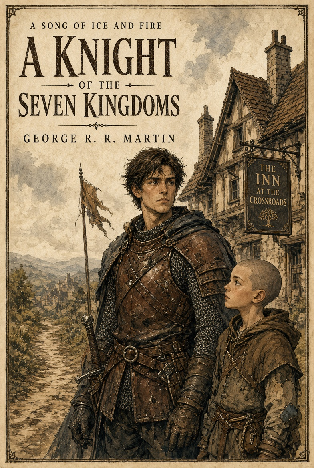
Martin collected the three stories into one volume, and the collection was published with artwork by Gary Gianni.
The first season of the HBO series does not adapt all three stories.
It adapts “The Hedge Knight.”
That point is very important when discussing A Knight of the Seven Kingdoms book vs show.
Many readers see the title of the book and assume the first season covers the whole book. It does not.
Instead, the show focuses on the first meeting between Dunk and Egg and the events around the Ashford Meadow tournament. Martin confirmed this plan when HBO announced the series.
A Knight of the Seven Kingdoms Book vs Show Begins With Dunk
Dunk is the heart of both versions.
He is huge, poor, inexperienced, and unsure of himself.
Yet Dunk has something that many powerful knights lack: a strong sense of right and wrong.
He does not understand court politics very well. He does not have a famous family name. He does not have a huge army behind him.
Still, he wants to live as a true knight.
That simple goal makes him easy to understand.
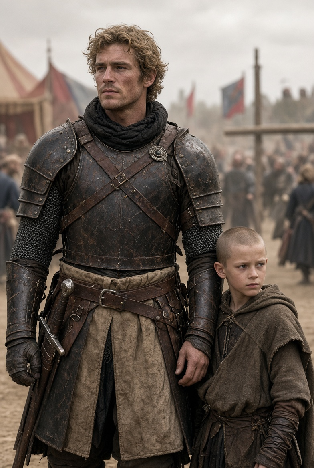
The television version keeps this idea intact. Peter Claffey plays Dunk as a large man who often looks uncomfortable in a world built for smaller, richer, and more powerful people.
The show also uses his body well.
He is tall enough to stand out in almost every scene. That helps viewers understand why people call him Dunk the Tall without needing a long explanation.
Dunk in the Book Feels More Personal
One major difference in A Knight of the Seven Kingdoms book vs show comes from Dunk’s inner thoughts.
In the novella, readers spend more time inside Dunk’s head.
We understand his worries.
We understand his hunger.
We understand how little money he has.
We also understand how confused he can become when noble people talk about family, rank, honor, and tradition.
A television show cannot simply show every thought.
Instead, the actor must communicate those feelings through his face, voice, body language, and choices.
Peter Claffey does this especially well when Dunk feels embarrassed or out of place.
As a result, the show loses some of the book’s direct inner voice, but it gains a strong visual version of Dunk.
A Knight of the Seven Kingdoms Book vs Show Makes Egg More Visual
Egg is one of the biggest reasons the adaptation works.
At first, he looks like an ordinary young boy.
He is clever.
He is annoying.
He talks too much.
He also knows more than he should.
That last point matters.
Egg is not simply Dunk’s helper. He has a secret identity.
He is actually Prince Aegon Targaryen, a member of the royal family.
The book lets readers slowly notice that something about Egg is different.
The show uses his face, behavior, words, and reactions to build the same mystery.
Dexter Sol Ansell brings a sharp energy to the character. The young actor does not play Egg like a helpless child. Instead, Egg often seems like the smarter person in the room.
That creates a fun contrast.
Dunk has the size.
Egg has the knowledge.
Dunk has the sword.
Egg has the information.
Together, they become a surprisingly strong team.
Egg’s Secret Works Differently on Screen
In the book, Egg’s identity creates a special kind of tension because readers can follow clues through Dunk’s limited understanding.
The show can do something different.
It can let the camera linger on Egg.
It can show his reactions when royal names appear.
It can place him near important people.
It can also use silence.
Therefore, A Knight of the Seven Kingdoms book vs show gives Egg two different forms of mystery.
The book makes the reader think.
The show makes the viewer watch.
Both approaches work.
The First Meeting of Dunk and Egg
The relationship between Dunk and Egg is the real story.
The tournament gives them a reason to meet, but their friendship gives the story its heart.
Dunk has recently lost Ser Arlan of Pennytree.
Now he must find a way to survive as a hedge knight.
He needs money.
He needs a horse.
He needs equipment.
He also needs a chance to prove himself.
Then Egg appears.
The boy offers himself as Dunk’s squire.
At first, Dunk does not trust him.
That makes sense.
Why would a strange young boy follow a poor knight?
Soon, however, Egg proves useful.
The show keeps this basic relationship very close to the book.
A Knight of the Seven Kingdoms Book vs Show Gets the Friendship Right
The friendship is probably the strongest part of both versions.
Dunk protects Egg.
Egg helps Dunk.
Dunk teaches Egg about the life of a knight.
Egg teaches Dunk things about the world that Dunk does not know.
Most importantly, they care about each other.
That care grows naturally.
There is no need for a giant romantic subplot.
There is no need for a magical prophecy.
There is no need for dragons.
Instead, the story asks a simple question:
Can two very different people become loyal friends?
The answer is yes.
That simple idea gives the show much of its warmth.
Why the Tournament Matters So Much
The Ashford Meadow tournament is not just a sporting event.
It gives Dunk his chance.
He wants to enter the lists.
He wants to prove that he deserves to call himself a knight.
But there is a problem.
Dunk has no great family name.
He has no powerful lord protecting him.
He has limited money.
He also lacks the social standing that many other knights enjoy.
The tournament therefore becomes a test of more than skill.
It becomes a test of identity.
A Knight of the Seven Kingdoms Book vs Show and the Tournament
The tournament works differently in a book and on television.
In prose, Martin can describe knights, armor, horses, tents, weapons, food, gossip, and social rules.
On television, the audience can see all of that.
The tents fill the screen.
The horses move through the camp.
The armor shines.
The crowds react.
The jousts feel physical.
That is one of the biggest advantages of the show.
A television production can make the tournament feel like a real place.
The Show Expands the Tournament World
The novella is already rich, but television needs enough material for six episodes.
Therefore, the show spends more time with several characters.
We see more of the people around Dunk.
We also get a better sense of the tournament camp.
That expansion helps the audience understand the social world.
However, it can also make the story feel slower than the novella.
This is an important part of A Knight of the Seven Kingdoms book vs show.
The book moves quickly because it is short.
The show has more time.
So the show can breathe.
Baelor Breakspear Is Important in Both Versions
Prince Baelor Breakspear is one of the most important figures in the story.
He represents the kind of noble knight Dunk admires.
Baelor is powerful.
He is skilled.
He is respected.
Yet he also shows kindness.
This matters because Dunk’s idea of knighthood is based on honor.
Baelor gives that idea a real face.
He shows Dunk that a powerful man can still behave with fairness.
A Knight of the Seven Kingdoms Book vs Show Makes Baelor’s Loss Hurt
The story’s trial by combat becomes a major emotional moment.
Dunk needs help.
Baelor steps forward.
The fight becomes brutal.
Dunk survives.
But the victory comes with a terrible cost.
Baelor dies from his wounds.
The show makes this moment especially painful because viewers have spent more time seeing Baelor as a person.
The book also makes the death powerful, but the screen version uses acting, sound, and close-up shots to make the loss immediate.
The Season 1 finale follows the emotional consequences of this event and shows Dunk struggling with what happened.
The Trial by Combat Changes the Mood
The story begins with humor.
Dunk struggles to enter the tournament.
He meets Egg.
He tries to find food and money.
There are funny moments.
Then the story becomes much darker.
The trial by combat reminds us that Westeros is still dangerous.
Knights can die.
Princes can make terrible choices.
Honor can cost a person his life.
The show keeps this change in mood.
A Knight of the Seven Kingdoms Book vs Show Has Different Pacing
Pacing is one of the clearest differences.
The novella is short.
The reader can move through the tournament and conflict fairly quickly.
The series has six episodes.
That gives the writers space to add conversations, character moments, travel, jokes, and smaller events.
Some viewers will love this.
Others may prefer the book’s faster movement.
The Guardian also noted that the television version uses short episodes and a more character-focused structure rather than the huge scale of Game of Thrones.
Why Six Episodes Make Sense
Six episodes may sound small compared with Game of Thrones.
However, it fits this story.
The source material does not need ten giant episodes.
The story is about two people.
It is not about every major family in Westeros.
It does not need dozens of locations.
It does not need large armies.
It does not need dragons.
Martin said the first season would likely have six episodes, and the finished season contains six.
A Knight of the Seven Kingdoms Book vs Show Has a Softer Tone
The tone may surprise Game of Thrones fans.
The original show became famous for violence, political games, sex, war, and shocking deaths.
A Knight of the Seven Kingdoms is much gentler.
That does not mean it is childish.
Instead, it is more personal.
The show focuses on friendship, honor, food, money, travel, jokes, and the strange problems of being a knight.
Critics also noticed this lighter tone. The Guardian described the series as a gentler and more character-driven version of Westeros.
Humor Is Stronger on Television
Some jokes are easier to enjoy when actors perform them.
A funny face can say more than a paragraph.
Dunk’s physical size also creates humor.
He is supposed to be a great knight, yet he often struggles with simple social situations.
Egg makes the situation even funnier.
The pair sometimes feels like an old comedy team.
That does not weaken the story.
Instead, it makes the serious moments more powerful.
The Book Has More of Martin’s Voice
If you want the purest version of George R. R. Martin’s writing style, read the book.
The prose gives the story its own rhythm.
You get Dunk’s observations.
You get small details about Westeros.
You get jokes that work because of the way Martin writes them.
You also get a strong sense of how Dunk sees the world.
That is difficult to reproduce perfectly on screen.
A Knight of the Seven Kingdoms Book vs Show and World Building
The book gives readers a deeper sense of Westeros.
You learn about knights.
You learn about noble families.
You learn about old wars.
You learn about the Targaryens.
You learn about the social rules of tournaments.
The show can show these things quickly.
For example, a Targaryen banner can tell viewers something without a long explanation.
A costume can show social rank.
A sword can show status.
A castle can show wealth.
Television replaces some words with images.
The Targaryen Family Feels Different
The Targaryens still rule Westeros during this story.
However, their world is very different from the one seen in House of the Dragon.
The dragons are gone.
The great civil war is in the past.
The family still has enormous power, but the sense of wonder around dragons has faded.
That gives the story an interesting feeling.
Westeros is still ruled by Targaryens, but it is not the same world.
Martin’s own description of the book places the stories nearly a century before A Game of Thrones, when Targaryen rule still controls the Iron Throne.
A Knight of the Seven Kingdoms Book vs Show Uses Westeros History
Fans of Game of Thrones will notice many family names.
Baratheons appear.
Targaryens appear.
Fossoways appear.
Other familiar houses appear as well.
However, the story does not require you to remember every family tree.
That is a major advantage.
You can enjoy the show without knowing every detail from the larger universe.
The Guardian praised the show’s simpler story and its ability to stand apart from the heavier lore of previous Westeros shows.
The Role of Ser Lyonel Baratheon
Ser Lyonel Baratheon is another enjoyable part of the adaptation.
Fans know the Baratheon name from Game of Thrones.
Here, however, the family is seen much earlier.
Lyonel is sometimes called the Laughing Storm.
He has confidence.
He likes food and fun.
He is also a skilled knight.
The show gives him a strong personality.
This is a good example of how television can make a supporting character memorable through performance.
Tanselle and the Human Side of the Story
Tanselle Too-Tall adds another important part of the story.
Her presence helps Dunk see the difference between the ideal of chivalry and the way powerful men sometimes behave.
That conflict matters.
A knight should protect people who cannot protect themselves.
But what happens when a powerful person thinks he can do whatever he wants?
That question sits at the center of Dunk’s moral journey.
A Knight of the Seven Kingdoms Book vs Show and Aerion
Aerion Targaryen is one of the story’s main sources of danger.
He is cruel.
He is proud.
He believes his royal blood makes him special.
Dunk cannot accept that.
This creates the central conflict.
Dunk may be poor, but he believes a knight must defend the weak.
Aerion may be a prince, but he does not behave like a good knight.
That contrast gives the story its moral power.
The Meaning of Knighthood
The story is really about what it means to be a knight.
Is a knight someone who wears armor?
Is a knight someone who wins tournaments?
Is a knight someone with a famous family?
Or is a knight someone who protects people?
Dunk chooses the last answer.
That is why he matters.
He is not perfect.
He makes mistakes.
He can be foolish.
He can be angry.
Yet he keeps trying to do the right thing.
A Knight of the Seven Kingdoms Book vs Show and Honor
The word “honor” appears in many Westeros stories.
But Dunk gives it a simple meaning.
If someone is weaker than you, help them.
If you make a promise, keep it.
If someone is treated unfairly, speak up.
If you are afraid, do the right thing anyway.
The show makes these ideas very easy to see.
The book lets readers think about them through Dunk’s thoughts.
Both versions succeed.
The Biggest Advantage of the Book
The book’s biggest advantage is depth.
You get more access to Dunk’s mind.
You can pause whenever you want.
You can reread a paragraph.
You can imagine the characters yourself.
You also get Martin’s original storytelling voice.
For readers who love fantasy prose, this is difficult to beat.
The Biggest Advantage of the Show
The show’s biggest advantage is performance.
Peter Claffey and Dexter Sol Ansell bring Dunk and Egg to life.
Their relationship feels natural.
The locations look real.
The tournament feels physical.
The costumes help explain the social world.
The music creates emotion.
You do not have to imagine what Dunk looks like.
You can see him.
A Knight of the Seven Kingdoms Book vs Show: Which Has Better Dunk?
This depends on what you want.
If you want Dunk’s thoughts, choose the book.
If you want Dunk’s physical presence, choose the show.
If you want Martin’s exact voice, choose the book.
If you want a living, breathing Dunk, choose the show.
Personally, the strongest approach is to enjoy both.
Read the novella first.
Then watch the series.
That order lets you notice what changed and what stayed the same.
Which Version Has Better Egg?
The answer is also close.
The book gives you the mystery of Egg through Dunk’s viewpoint.
The show gives you Dexter Sol Ansell’s performance.
Egg’s expressions become part of the storytelling.
His intelligence is easy to see.
His confidence is also easy to see.
Therefore, television gives Egg a stronger visual identity, while the book gives him more mystery through narration.
A Knight of the Seven Kingdoms Book vs Show: Visual Storytelling
The show has a major advantage when it comes to visual storytelling.
A tournament camp is difficult to explain in a short article.
But on television, one wide shot can show hundreds of details.
You can see:
knights
horses
tents
weapons
banners
servants
cooks
nobles
common people
armor
That makes Westeros feel large without needing a huge battle.
Real-Life Example: Why the Adaptation Feels Different
Think about reading a sports story and then watching the same match.
In a book, the writer explains what happened.
On television, you watch the player fall.
You hear the crowd.
You see the opponent move.
You hear the sound of the hit.
The event becomes physical.
The same thing happens with Dunk’s tournament.
The book makes you imagine the action.
The show makes you experience it visually.
That is the key lesson from A Knight of the Seven Kingdoms book vs show.
Case Study: The Trial by Combat
The trial by combat is the best example of adaptation working well.
In the book
The scene is tense because we understand Dunk’s fear and confusion.
In the show
The scene becomes a physical struggle.
We see the armor.
We see the injuries.
We see the exhaustion.
We hear the crowd.
We also see Dunk’s relationship with Baelor.
The television version can therefore make the event feel longer and more painful.
The fifth episode ends with Baelor’s death, while the sixth episode focuses heavily on Dunk’s emotional and physical recovery.
A Knight of the Seven Kingdoms Book vs Show: What Was Expanded?
The television version expands several areas.
These include:
The tournament environment.
Supporting characters.
Dunk’s personal past.
Dunk and Egg’s daily relationship.
Social moments around the tournament.
Visual clues about Egg.
The emotional aftermath of the fight.
Some character interactions.
The physical world around the characters.
The journey from one major event to another.
These changes help turn a short novella into a television season.
What Was Not Changed?
The heart of the story remains.
Dunk is still Dunk.
Egg is still Egg.
The tournament still matters.
Aerion is still dangerous.
Baelor still represents the best side of noble knighthood.
Dunk still has to decide what kind of knight he wants to be.
That is why Martin called the series a very faithful adaptation.
A Knight of the Seven Kingdoms Book vs Show: What Fans Should Not Expect
Do not expect another Game of Thrones.
Do not expect another House of the Dragon.
There are no giant dragon battles.
There is no huge war between armies.
There is no complicated struggle involving dozens of major characters.
There is no White Walker threat.
Instead, the show focuses on two travelers.
Martin himself warned that viewers looking only for constant action might not enjoy this style, because the story focuses on duty, honor, and chivalry.
The Show’s Main Weakness
The main weakness is that some viewers may find the slower pace difficult.
If you want nonstop action, this series may feel too quiet.
The show also has to spend time introducing people and places.
That can make some episodes feel more like setup.
However, the slower pace gives Dunk and Egg room to grow.
So this weakness depends on the viewer.
The Book’s Main Weakness
The main weakness of the book is simple.
It is short.
That is great for a quick read.
However, some readers may want more time with Dunk and Egg.
You may finish the first story and immediately want another.
Luckily, there are two more published novellas in the collection.
Martin has said the first collection contains The Hedge Knight, The Sworn Sword, and The Mystery Knight.
A Knight of the Seven Kingdoms Book vs Show: Advantages and Disadvantages
Book advantages
More inner thoughts.
More direct access to Dunk.
Martin’s original prose.
Easy to read at your own speed.
Strong character detail.
Short and focused.
Book disadvantages
Less visual action.
Some characters may look different from what you imagined.
The tournament exists only in your imagination.
Readers unfamiliar with Westeros may miss some visual context.
Show advantages
Excellent Dunk and Egg chemistry.
Strong performances.
Realistic locations and costumes.
Clear visual storytelling.
More time with supporting characters.
Emotional fight scenes.
Show disadvantages
Some scenes take longer.
Some inner thoughts disappear.
Added material may not feel as fast as the book.
Viewers may compare it too much with Game of Thrones.
Expert Advice for New Readers
If you have never read George R. R. Martin before, do not worry.
You do not need to memorize the entire history of Westeros.
Start with The Hedge Knight.
Pay attention to Dunk and Egg.
Then watch the series.
After that, read the other two novellas.
This gives you a simple path into the wider world.
You can also use Martin’s official website for information about the Dunk and Egg stories and their publication history.
For official television information, check HBO’s A Knight of the Seven Kingdoms page.
A Knight of the Seven Kingdoms Book vs Show: Who Should Read First?
Read first if you:
Love fantasy books.
Want Dunk’s thoughts.
Want the original story.
Want to notice adaptation changes.
Prefer short stories.
Like Martin’s writing.
Watch first if you:
Prefer television.
Want to meet Dunk and Egg visually.
Do not read much fantasy.
Want a quick introduction to Westeros.
Enjoy character-driven shows.
Either order works.
Still, reading first gives you the best comparison.
Why This Story Feels Fresh in Westeros
The story feels fresh because it does not try to copy Game of Thrones.
That is important.
Many fantasy franchises become bigger and louder with every new entry.
This series goes in the opposite direction.
It becomes smaller.
It focuses on people.
It uses humor.
It lets characters eat, travel, argue, joke, and make mistakes.
That choice has been welcomed by critics who found the series a refreshing change from the larger Westeros productions.
A Knight of the Seven Kingdoms Book vs Show: Final Verdict
So, which one wins?
Best for story depth: Book
The novella gives you Martin’s writing and Dunk’s thoughts.
Best for character chemistry: Show
Dunk and Egg become real people through the actors.
Best for world building: Book
The prose gives you more room to think about Westeros.
Best for visual detail: Show
The tournament, costumes, horses, and locations are much easier to experience.
Best for emotional performance: Show
The actors can communicate feelings without explaining them.
Best overall: Both
The strongest way to experience the story is to read the novella and then watch the series.
That way, you can see exactly how the adaptation turns a short written story into a six-episode drama.
A Knight of the Seven Kingdoms Book vs Show: The Bigger Meaning
At its heart, A Knight of the Seven Kingdoms book vs show is really a comparison between two storytelling tools.
The book asks you to imagine.
The show asks you to watch.
The book gives you thoughts.
The show gives you faces.
The book gives you words.
The show gives you movement.
Neither version needs to destroy the other.
In fact, they work better together.
The story is also important because it shows a different side of Westeros.
Dunk is not a king.
Egg is not yet the ruler he may become.
They are simply two travelers trying to survive.
Yet their small journey matters.
That is the magic of the story.
A Knight of the Seven Kingdoms Book vs Show: Full Comparison
Frequently Asked Questions
Is A Knight of the Seven Kingdoms based on a book?
Yes. The series is based on George R. R. Martin’s Dunk and Egg stories. Season 1 adapts “The Hedge Knight,” the first published novella about the pair.
Is A Knight of the Seven Kingdoms the same as The Hedge Knight?
Not exactly. The Hedge Knight is the first novella, while A Knight of the Seven Kingdoms is the title of the collection containing the first three Dunk and Egg novellas.
Does Season 1 cover the whole book?
No. Season 1 focuses on The Hedge Knight rather than all three stories.
Is the show faithful to the book?
Yes. George R. R. Martin has described the first season as a very faithful adaptation.
Who plays Dunk?
Peter Claffey plays Ser Duncan the Tall, also known as Dunk.
Who plays Egg?
Dexter Sol Ansell plays Egg, whose real identity is Prince Aegon Targaryen.
Is Egg really a Targaryen?
Yes. Egg is the nickname used by Aegon Targaryen, a prince whose identity Dunk does not initially understand.
Is A Knight of the Seven Kingdoms a sequel to Game of Thrones?
No. It is a prequel. The story takes place many decades before the events of Game of Thrones.
Does A Knight of the Seven Kingdoms happen before House of the Dragon?
Yes. The Dunk and Egg story takes place after the events covered by House of the Dragon but long before Game of Thrones.
Does the show have dragons?
The story does not focus on dragons. This is one of the biggest differences from the larger Targaryen stories.
Is the book better than the show?
That depends on your taste. Readers who love prose and inner thoughts may prefer the book. Viewers who enjoy acting and visual storytelling may prefer the show.
Is the show suitable for children?
Not necessarily. Although it has a lighter tone than Game of Thrones, it still contains violence, adult themes, and other material intended for mature viewers.
How many episodes are in Season 1?
Season 1 has six episodes. Martin originally discussed a six-episode first season, and the completed season followed that plan.
Does the show include The Sworn Sword?
No. Season 1 adapts The Hedge Knight. The Sworn Sword is the second Dunk and Egg novella.
Does the show include The Mystery Knight?
No. The Mystery Knight is the third published Dunk and Egg novella.
Should I read A Knight of the Seven Kingdoms before watching?
Yes, if you want to compare the adaptation closely. Reading The Hedge Knight first helps you notice changes and additions.
Is Dunk a good knight?
Dunk is not perfect, but he strongly believes that knights should protect people and act with honor. His actions prove that his values matter more than his social status.
Why is Egg hiding his identity?
Egg is a prince, but he travels with Dunk without openly presenting himself as a member of the royal family. Keeping his identity secret allows him to experience life in a different way.
Is A Knight of the Seven Kingdoms like Game of Thrones?
It shares the same world, but its style is very different. The story is smaller, funnier, and more focused on friendship and personal honor.
Which should I choose: the book or the show?
Choose both if you can. Read The Hedge Knight first, then watch Season 1. That gives you the best experience of A Knight of the Seven Kingdoms book vs show.
Conclusion
A Knight of the Seven Kingdoms book vs show does not have a simple winner because both versions offer something different.
The book is better for readers who want George R. R. Martin’s voice, Dunk’s thoughts, and a short but rich fantasy story.
The show is better for viewers who want strong performances, beautiful settings, funny moments, and a living version of Dunk and Egg.
Most importantly, the television adaptation understands what makes the original story special.
It does not need dragons to be exciting.
It does not need a huge war to create danger.
It does not need dozens of characters to create drama.
Instead, it gives us Dunk and Egg.
One is a huge, poor hedge knight who wants to live by the rules of honor.
The other is a clever young prince who hides behind the simple name Egg.
Together, they create one of the most human stories in the Westeros world.
George R. R. Martin has also indicated that the future plan is to move toward The Sworn Sword if the series continues.
George R. R. Martin — Dunk and Egg
Martin’s official website provides background on the Dunk and Egg stories and their publication history. George R. R. Martin — Dunk and Egg
HBO / Warner Bros. Discovery — A Knight of the Seven Kingdoms
The official HBO press information confirms that the series adapts The Hedge Knight and follows Dunk and Egg about a century before Game of Thrones. HBO — A Knight of the Seven Kingdoms Official Information
HBO Press Release — Series Order
Useful for discussing the show’s creators, George R. R. Martin’s involvement, Ira Parker, and the original premise. HBO Press Release — A Knight of the Seven Kingdoms
HBO — Official Final Trailer
Great resource for readers who want to see the official trailer after reading your comparison.
George R. R. Martin — The Mystery Knight
This is useful when explaining that The Mystery Knight is another Dunk and Egg story and belongs to the wider book collection. The Mystery Knight — George R. R. Martin
George R. R. Martin — The Sworn Sword
Martin’s site also provides background on the second Dunk and Egg adventure, which helps readers understand what comes after The Hedge Knight. Dunk and Egg — The Sworn Sword background
The Guardian — A Knight of the Seven Kingdoms
A reputable independent source for discussing the show’s tone, style, and differences from Game of Thrones and House of the Dragon. The Guardian — A Knight of the Seven Kingdoms